Published: 10/15/2026 By: Big Round Wheel
Quick Answer: Before amusement rides arrive, event planners should check the entire equipment route from the public road to the setup area, not just the final ride footprint. Confirm gates, turns, surface conditions, staging space, vendor conflicts, and any access restrictions with the ride provider before the layout is finalized.
Site Access Is Part of Amusement Ride Planning
Event planners often focus first on which rides will create the biggest visual impact or the best guest experience. That makes sense, but the venue has to be able to receive the equipment before any attraction can become part of the event. Amusement ride site access starts with a simple question: can the equipment, support vehicles, crew, and setup materials move from the public road to the intended installation area without running into avoidable obstacles?
The answer depends on the specific attraction, the property, and the route through the venue. A location may have plenty of open space once you reach the event field but still have a narrow gate, tight turn, low branch, soft shoulder, steep transition, locked access point, or vendor traffic pattern that complicates arrival. That is why site access should be reviewed before the event layout is considered final.
Before choosing the final ride location, review the available amusement ride rentals and discuss the venue with the provider. Different attractions can have very different transportation, setup, and operating needs, so the correct site plan is the one built around the actual equipment being considered.
Start With the Route From the Street to the Setup Area
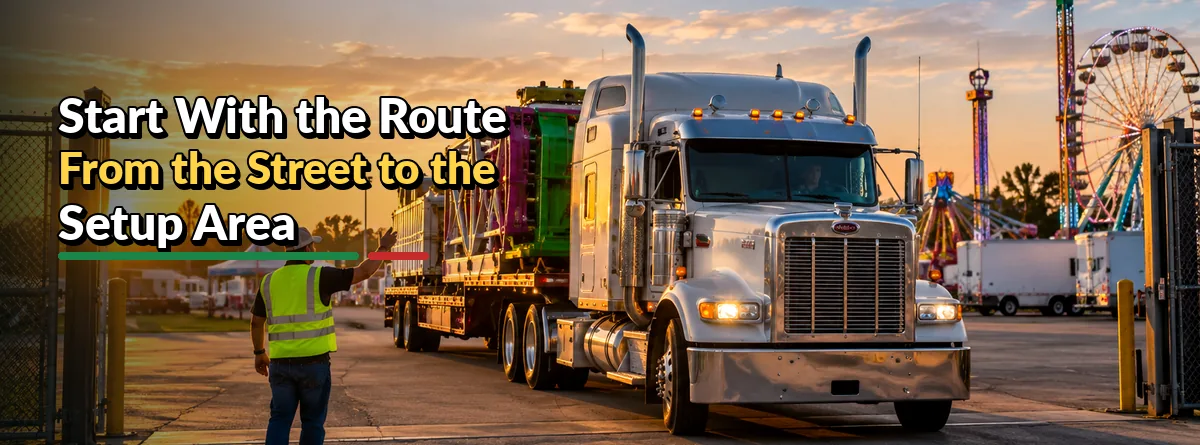
Do not evaluate only the final patch of ground where the ride will stand. Walk or drive the complete route that the equipment will use, beginning at the road entrance and ending at the setup area. Look at the route as if you were bringing in a large commercial vehicle rather than a passenger car.
Pay particular attention to gate openings, tight turns, curbs, overhead obstacles, temporary fencing, parked vehicles, and changing traffic patterns. Medians, islands, decorative arches, loading docks, landscaping, and one-way traffic patterns can also affect movement through the property.
Consider whether the route itself will change as the event comes together. A road that is completely open during the planning stage may later be filled with food trucks, tents, barricades, sponsor displays, equipment, or pedestrian traffic.
Exact vehicle dimensions and turning requirements vary by attraction, so avoid guessing. Send the ride provider clear photos, a site plan, and any measurements that may matter. If an access point looks questionable, bring it up early enough for the layout or arrival route to be adjusted.
Ground Conditions and Working Space Matter After the Truck Arrives
Reaching the event field is only the first step. The crew also needs usable working space around the installation area. Setup may involve support vehicles, equipment movement, fencing, power equipment, tools, and crew activity before the attraction is ready for guests.
Event planners should identify the intended setup surface and share any conditions that may affect access or positioning. A surface that looks acceptable in a site photo can behave differently after rain, landscaping work, irrigation, or repeated vehicle traffic.
The provider should know whether the route and setup area are paved, compacted, grass, gravel, or another surface so current requirements can be reviewed for the attraction being discussed.
It is also smart to preserve a usable working area during setup rather than filling every nearby space with other vendors. Temporary flexibility can make arrival and installation easier, and the area can be finalized once the attraction and required support equipment are in position.
Coordinate Gates, Staging, and Vendor Access Before Arrival
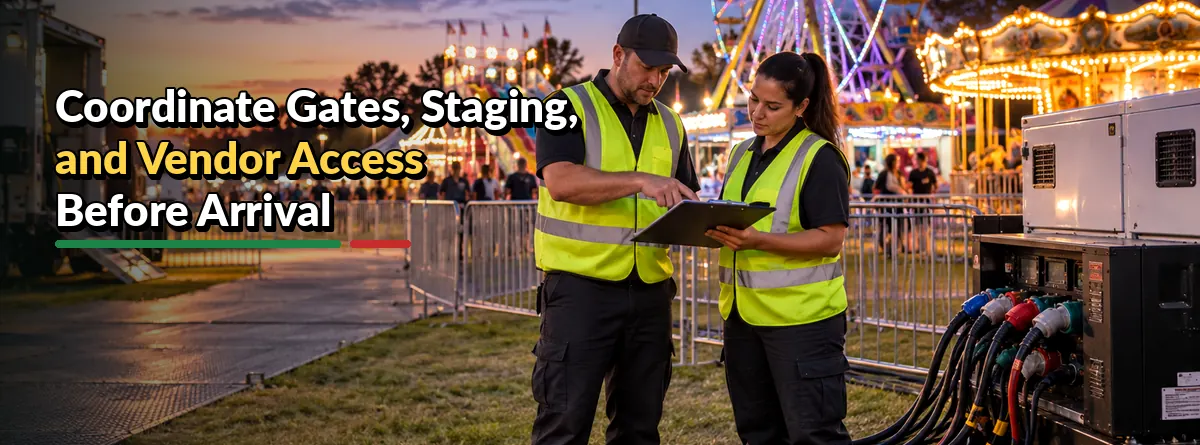
Amusement rides are rarely the only thing arriving at a large event. Caterers, production crews, tent companies, sanitation services, sponsors, entertainers, security teams, and other vendors may all be using the same roads and staging areas.
Problems can happen when each vendor has a workable plan individually but the combined arrival schedule creates congestion. Access planning should therefore be coordinated as part of the overall event setup, not handled separately by each vendor.
Build a delivery sequence before the busiest setup period begins. Decide which access points remain open, who can move barricades, where vehicles can wait, and who has authority to direct a driver if the planned route is blocked.
Make sure security personnel and venue staff know that large equipment may require access to areas that will later become pedestrian-only.
Staging space can be just as important as the final ride location. If equipment arrives before the exact setup area is ready, there should be a safe place for the vehicle to wait without blocking emergency lanes, vendor entrances, public roads, or the access route needed by other crews.
If no staging area exists, timing becomes even more important. The event team and ride provider should coordinate arrival closely enough that equipment is not left waiting for an occupied or inaccessible setup area.
Plan the Setup Window Before the Event Site Gets Busy
One of the easiest ways to create unnecessary pressure is to schedule major attraction setup after tents, booths, decorations, fencing, and other vendors have already narrowed the working area.
The better approach is to coordinate the attraction schedule with the overall production timeline. Equipment access is generally easier before the event site becomes crowded with temporary structures, parked vehicles, vendor installations, and pedestrian-control barriers.
The amusement ride rental process should be reviewed early so the event team understands what information needs to be confirmed before arrival.
Ask when the crew expects access, how the venue should be prepared, and what areas need to remain clear. Avoid assuming that every attraction can follow the same arrival and setup sequence.
If the venue has restricted access hours, road closures, campus traffic, building delivery windows, shared loading areas, or other site limitations, include those details in the planning conversation. The objective is not to create a complicated rulebook. It is to remove surprises before equipment reaches the property.
Give the Ride Provider Useful Site Information
Good site information helps the provider evaluate the event faster. A basic street address is not enough when the property has multiple entrances, restricted roads, or a large interior traffic system.
Send information that shows how the equipment will actually reach the installation area. The more clearly the venue can be understood before arrival, the easier it is to identify potential access concerns early.
- The exact event address and preferred equipment entrance
- Photos looking toward and through the main gate
- A simple site map with the proposed ride location marked
- Known gate widths, tight turns, curbs, slopes, or overhead obstacles
- The setup surface and condition of the access route
- Locations of temporary fencing, tents, food trucks, stages, and vendor zones
- Arrival restrictions or times when gates and roads will be unavailable
- The name and phone number of the person who can solve access issues on site
For larger events, a marked-up aerial image can be especially useful because it gives everyone the same reference point. Label the entrance, travel route, setup location, staging area, and any known problem spots.
The goal is to make the equipment route easy to understand before the crew is physically on the property.
Match the Attraction to the Property, Not Just the Guest List
Ride selection is not only about age groups, attendance, visual impact, or the type of guest experience an organizer wants to create. The property itself is also part of the attraction-selection process.
An attraction that looks perfect for an event may require a different placement or access route than the planner first imagined. A small change in location can sometimes make the overall event layout more practical while still preserving the experience the organizer wants.
That does not mean planners need to become transportation or ride-setup experts. It means the venue information should be part of the selection process.
Big Round Wheel can review the event location, site access, available space, and event goals while discussing suitable attractions. Providing useful site information early gives the conversation a much better starting point than choosing an attraction first and trying to solve access concerns later.
Start by reviewing the Big Round Wheel website for an overview of available rental options and event-planning information.
Event planners can also review Big Round Wheel's amusement ride and event gallery to see examples of attractions in different event environments.
When you are ready to discuss a specific property or event, contact Big Round Wheel and provide the venue location, proposed setup area, access details, event type, and any known site restrictions.
That gives the Big Round Wheel team better information to work with when discussing the attraction and current planning requirements for the event.
A Better Arrival Plan Helps the Entire Event Setup
Site access is one of those planning details that is easy to overlook because guests never see the delivery route, staging decisions, vendor coordination, or setup activity that happened before the event opened.
But those behind-the-scenes decisions can affect the entire production schedule. A blocked gate, occupied staging area, unexpected turn, or vendor conflict discovered on arrival can create a problem that could have been identified much earlier.
Before the attraction is finalized, confirm the route from the street, keep gates and working areas available, coordinate other vendors, share accurate site information, and review the plan with the ride provider.
A few early conversations can prevent a last-minute scramble when the equipment arrives and the event site is already full of people, vehicles, tents, barriers, and other vendors.
Good amusement ride site access planning is ultimately about making sure the venue, attraction, and event-production plan work together before setup day arrives.
Frequently Asked Questions
What should event planners check before amusement rides arrive?
Event planners should review the complete equipment route from the public road to the setup area, including gates, turns, surface conditions, overhead obstacles, staging space, vendor traffic, and any known access restrictions.
Is having enough open space for an amusement ride all that matters?
No. The ride equipment also has to reach the setup area, so access roads, gates, turns, temporary fencing, parked vehicles, vendor traffic, and working space should all be reviewed before the event layout is finalized.
Are site-access requirements the same for every amusement ride?
No. Transportation, setup, and access needs can vary by attraction, so planners should confirm the current requirements for the specific ride being considered rather than assuming all rides have the same needs.
What venue information should I send Big Round Wheel before planning an amusement ride rental?
Send the event address, preferred equipment entrance, photos of the access route, a marked site plan, setup-surface information, known restrictions, and contact information for the person managing venue access.


