Published: 10/01/2026 By: Big Round Wheel
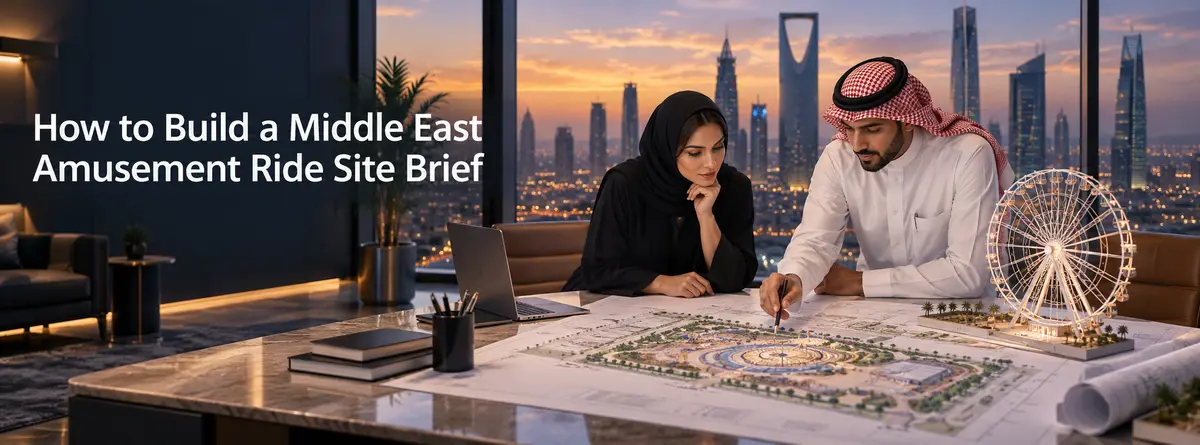
Quick Answer: A useful site brief gives the ride provider clear facts about the venue, access route, event schedule, audience, available space, ground conditions, utilities and decision process. Photos, measurements and a marked site plan can help the provider identify suitable attractions and explain what still needs confirmation.
Turn Venue Facts Into a Proposal-Ready Brief
An international amusement ride proposal becomes more useful when the supplier receives accurate site information at the beginning. A strong brief does not need to be a polished engineering document. It should give the attraction provider enough verified detail to understand the event, assess possible ride choices, and identify the questions that must be resolved before a final commitment.
For agencies producing events in Saudi Arabia, the UAE, and other Middle East markets, this early information is especially valuable. Transportation, venue access, installation windows, and local production responsibilities may influence the recommendation as much as the creative idea. Begin by reviewing Big Round Wheel's Middle East amusement ride and branded attraction services so the site brief supports the type of experience being considered.
What Site Information Should an Agency Provide?
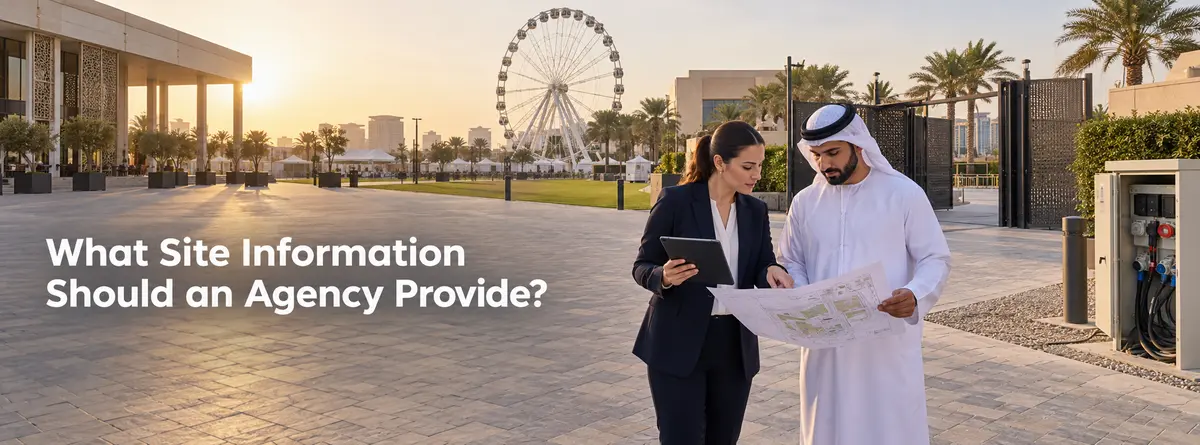
Start with the event name, city, venue, proposed dates, public operating hours, and expected attendance. Explain whether the attraction is intended to be a visual centerpiece, a family activity, a sponsor activation or one part of a larger entertainment zone. This context helps the provider understand the job the attraction must perform rather than simply selecting equipment from photographs.
Include a current site plan whenever one is available. Mark the proposed ride area, guest entrances, emergency routes, queue locations, nearby structures, landscaping, overhead obstructions and areas that must remain clear. Add reliable measurements and identify whether they came from venue drawings, an on-site survey, or an estimate. If dimensions are not confirmed, label them clearly instead of presenting assumptions as facts.
- Event purpose, audience profile and estimated attendance
- Preferred attractions and acceptable alternatives
- Usable footprint, queue area and pedestrian circulation
- Operating dates, daily hours and noise or lighting limits
- Available drawings, photographs, videos and venue contacts
Document Delivery Access and Ground Conditions
Large rides arrive on commercial vehicles, so the route from the public road to the installation area deserves its own section. Photograph gates, turns, loading areas and any narrow or height-restricted points. Note gate widths, surface changes, weight restrictions, slopes, curbs, and the distance from the unloading point to the proposed ride position. If venue traffic must stop during delivery, identify who can authorize that closure and which hours are available.
Describe the installation surface as precisely as possible: reinforced concrete, asphalt, compacted material, lawn or another surface. Mention drainage, irrigation, underground services, and any venue rule that restricts anchoring or ground penetration. The supplier will still need to evaluate the location, but accurate early information helps prevent a creative layout from being built around an unsuitable area.
Clarify Power, Lighting and Production Responsibilities
State what electrical service the venue believes is available, where it is located, and who can verify it. Do not assume that a nearby cabinet has the required capacity or connection. If generator power may be needed, show potential generator locations and consider service access, cable routes, guest separation, and noise. Big Round Wheel's amusement ride rental process provides useful background on setup, operation, and removal.
The brief should also identify responsibilities. Name the organization coordinating venue permission, local permits, site security, crowd management, utilities and production schedules. International projects often involve an agency, venue operator, local production partner, and end client. A simple responsibility list helps questions reach the correct decision-maker without slowing the proposal.
A Complete Brief Leads to a Clearer Proposal
Separate confirmed information from preferences and open questions. For example, the event date may be fixed while the exact ride location is still under review. The client may prefer a Ferris wheel while remaining open to other attractions that better suit the site. This distinction allows the provider to explain options, conditions, and next steps without mistaking an early concept for an approved plan.
Before sending the brief, ask the venue and production teams to review the measurements, access notes, and operating schedule. Attach the latest files with clear names and include one primary agency contact. Agencies considering a Saudi project can also review Big Round Wheel's Saudi Arabia Ferris wheel and amusement ride planning page.
Send the Facts That Help the Conversation Move Forward
A complete site brief does not replace technical review, but it gives the first proposal a stronger foundation. Accurate venue information helps Big Round Wheel discuss appropriate attraction options, possible logistics, and the items that need further confirmation. Explore the company's available amusement ride rentals, then contact Big Round Wheel with an international event proposal that includes the site plan, schedule, audience information, and agency contact details.
Frequently Asked Questions
What is an amusement ride site brief?
It is a concise package of event, venue, access, schedule, and production information that helps an amusement ride provider assess the project and prepare a more relevant proposal.
Does the site brief need professional engineering drawings?
Not for the initial conversation. A current venue plan with reliable dimensions, photographs, and clearly marked access can be useful, although technical review may still be required later.
What venue photographs should an event agency include?
Include the proposed ride area, delivery gates, vehicle routes, turns, surface conditions, nearby structures, overhead obstructions, utilities and the site from several useful angles.
Should an agency choose the exact ride before sending the brief?
No. The agency can list preferred attractions and acceptable alternatives. The available space, access, audience, schedule, and event goals may influence the final recommendation.
Why should confirmed facts and open questions be separated?
Separating them helps the ride provider understand what can be used immediately, what remains a preference and which items require venue or client approval before planning advances.


