Published: 04/01/2026 By: Big Round Wheel
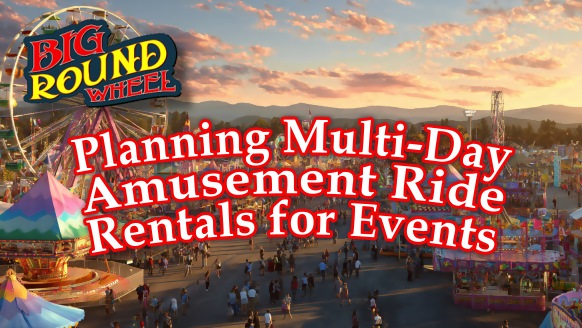
Amusement Ride Rental for Multi-Day Events Without the Headaches
Planning an amusement ride rental for multi-day events sounds exciting at first. You picture bright lights, kids laughing, maybe a Ferris wheel turning slowly in the background. Then reality kicks in. Logistics, staffing, weather, safety inspections, power requirements, it all stacks up pretty fast.
I have seen event planners underestimate this more times than I can count. Not because they are careless, but because multi-day events are just different. A one-day setup is one thing. Keeping rides running smoothly for several days, sometimes a full week, that is a whole different level of planning.
The good news is that once you understand how amusement ride rentals for multi-day events actually work, you can plan ahead more effectively and reduce stress. Not easy, but definitely manageable.
Why Multi-Day Events Require a Different Approach
The thing is, rides are not just dropped off and left alone. For multi-day use, there are ongoing considerations that many people overlook at first.
With a single-day event, crews can set up, operate, and tear down in a tight window. With longer events, you are dealing with wear and tear, daily inspections, staffing rotations, and sometimes even mid-event maintenance.
Attendance fluctuates daily. Day one might be packed; day three may slow down, and weekends can spike. That affects ride use, staffing needs, and attraction placement.
Choosing the Right Mix of Rides
Choosing the right mix of rides is important for multi-day events. Not all rides are ideal for every format; some are better for short bursts, while others are better for continuous use over several days.
A balanced selection is best. Choose rides that attract all age groups and withstand repeated use with minimal downtime.
- Family rides that have broad appeal and reliable demand
- High thrill rides that draw crowds during peak hours
- Kid-friendly rides that keep younger guests engaged
- Visually attractive rides that act as anchors for your layout
Honestly, the visual factor matters more than people think. A large, eye-catching ride can draw people across the event space, helping distribute foot traffic and preventing one area from feeling crowded.
Understanding Setup and Teardown Timelines
Let's transition to setup and teardown timelines. This is where things can get a little tricky. Amusement ride rental for multi-day events usually involves longer setup times, sometimes a full day or more, depending on the size of the rides.
Teardown also requires extra time. After days of operation, crews need to safely dismantle rides, often extending beyond your event's end.
Plan your schedule with extra time. Rushing setup or teardown nearly always results in problems and often extra costs.
Alongside scheduling, you will also need to focus on the nuts and bolts of your event, like power and space requirements.
Large rides require reliable power. For multi-day setups, generators are used, but these need fuel management, monitoring, and backups.
Space grows more important over time. Guests move each day differently, and tight layouts quickly feel cramped.
- Allow clear walkways between rides
- Plan for lines and waiting areas
- Keep emergency access routes open
- Consider how crowds will shift over multiple days
It is kind of like establishing a temporary mini park. You want it to move smoothly, not feel like everything was squeezed in at the last minute. Takeaway: Prioritize guest flow and safety when planning space.
Beyond layout and logistics, never overlook the human element. Effective staffing can make or break multi-day ride operations.
Most professional amusement ride rental companies provide staff, but for multi-day events, confirm in advance how staffing will be handled throughout the event.
Ask questions like:
- Will operators rotate shifts
- Is there backup staff available if someone calls out
- Who handles daily inspections and safety checks
- Is there on-site supervision at all times
Events often run into problems when they assume staffing is always covered. It rarely is that simple.
In addition to staffing, maintenance and safety inspections play a vital ongoing role throughout your event.
Check mechanical components, ensure safety restraints are working, and confirm operational measures are in place daily.
Most reputable companies include this, but clarify who is responsible and how often checks occur.
Because honestly, this is not the area where you want surprises.
Once you have addressed daily operations, be prepared. Weather is a powerful factor that can impact any multi-day event.
Some rides run in light rain; others cannot. Wind restrictions are common, especially for taller rides.
Have a flexible plan. Know limits ahead of time; not everything shuts down for minor bad weather.
And yes, guests will still come under less-than-ideal conditions, just maybe fewer of them.
Budgeting for Multi-Day Rentals
When planning multi-day amusement ride rentals, it is important to remember that cost is a key factor. Multi-day pricing isn't always a simple daily rate multiplied by the number of days, so consider how your needs may affect the final budget before moving forward.
Sometimes there are package deals. Other times, extended operations raise staffing and maintenance costs.
You might also run into additional expenses like:
- Fuel for generators
- Extended staffing hours
- Security for overnight equipment protection
- Insurance requirements
It adds up, but spreading the cost over multiple days can actually improve your overall return if attendance holds steady. Key takeaway: plan budgets with multi-day benefits and added expenses in mind.
Of course, financial details are not the only ongoing concern. Security and overnight protection are vital too.
For multi-day events, overnight security helps prevent theft and unauthorized access to equipment.
Lighting can also have a role here. A well-lit area is easier to monitor and tends to discourage unwanted activity.
It is one of those details that does not feel urgent until something goes wrong. Takeaway: Do not overlook overnight security and lighting for full event protection.
What Makes a Multi-Day Event Successful
To understand what makes a multi-day event successful, it helps to focus on one core factor: dependability in amusement ride rentals.
Ensure each day feels as organized as the first by planning for sustainability beyond the initial setup.
It is not about size or flash. It is about making sure everything works each day without constant problems.
Unforeseen issues arise, but with solid planning, they remain manageable rather than becoming major problems.
That is really the difference. Not perfection, just solid planning and realistic expectations. Final takeaway: good planning and adaptability keep multi-day events on track.


